
Investor Letter Q4 FY26

Dear investor,
As we mentioned in our last update, we’re laser-focused on delivering DPI from our early funds. Notably, in recent weeks, the acquisition of DroneDeploy by Procore has delivered a great outcome for our LPs and the company. It's also a clear illustration of how we approach growth-stage investing: we take a global view on which company will win a category, back that view with conviction and add value where we're genuinely positioned to. Our Portfolio Committee is working through a number of further liquidity opportunities across the early funds and we look forward to sharing more in future updates.
Three things moved in the last quarter of FY26 with direct consequences for how we invest and how we return capital: the funding of the AI build-out shifted off big tech balance sheets and onto credit markets, the model layer stopped being scarce and the exit window opened at the top end.
Underneath all three is the same pattern. The market is paying for what AI runs on and discounting what runs on it. That’s a defensible position while the plumbing is still being built, but it gets harder to hold once the water starts flowing and this quarter gave real evidence on when that might be.
Who’s paying for the build-out
Big tech stopped self-funding the build-out this quarter. Alphabet raised US$84.75 billion in the largest stock offering on record. SpaceX printed a US$25 billion bond a fortnight after listing and Apollo and Blackstone structured US$36 billion of chip-backed debt.
The reaction from the market saw stocks dip for both Alphabet and Tesla as their quarterly reports were underscored by heavy cash drain and concerns about climbing capex forecasts shaved roughly US$890 billion from the Magnificent Seven in late July. The build-out is also meeting physical limits: New York moved toward a pause on hyperscale data centres, US data centres are on track for a fifth of national electricity by 2035, and at home the RBA flagged the boom as a new pressure in the inflation fight.
We read this less as the AI bubble bursting and more about reaching the point in the cycle where discipline arrives and the building continues anyway. Demand is real and cloud growth is accelerating, but the open question is who foots the bill.
The US$1.5 trillion in AI infrastructure spend in 2026 needs roughly US$3 trillion of revenue to justify it. That gap won’t get closed by more capex. Someone had to build the plumbing before the water could flow and the build was always going to be front-loaded. But a trillion dollars a year eventually needs applications to earn it back. In the near term, that bill lands on application companies’ P&Ls, which is why we flagged managing token costs as an execution differentiator in our last letter. It’s what separates durable AI businesses from expensive ones.
That shift hasn't fully arrived yet, but the application layer is where ANZ builders have outperformed, and it's where we're most concentrated across the Airtree Fund IV and V portfolios, via investments such as Everlab (healthcare), Legora (legal), Haast (compliance), Letty (property), Lorikeet (customer support), Gridsight (energy), Kismet (disability and aged care), Constantinople (banking), Firmable (sales), Actuals (accounting) and many more.
The model layer stopped being scarce
Two things stood out amidst the drumbeat of releases.
The first is that the US government became a live variable in model access. The US export directive pulled access to Anthropic’s Fable 5 and Mythos 5 models in June citing national security concerns, before access was restored 19 days later. OpenAI slowed the roll out of GPT-5.6 at the ‘request’ of the government, with gated access given to roughly 20 government-approved organisations before its public release. Model access is now a policy variable, which makes multi-model resilience a board topic, not just an engineering preference. We’re raising it directly with the boards we’re on to reduce the concentration risk as well as manage token efficiency as a gross margin line. Both need active management rather than an annual review.
The second is that two Chinese labs shipped frontier-scale open-weight models. Alibaba's Qwen 3.8 comes close to matching frontier performance at roughly a tenth of the price, and Moonshot AI's Kimi K3 posted very strong coding and reasoning benchmarks. Research theatre aside, the commercial reality is open models now handle about 65% of the work on the largest routing platforms, and the share of spend going to the closed US labs fell from 97% to around 83% inside a month.
Cost is already moving where inference happens, capability is close enough that scarcity is a weakening moat and both make the point that differentiation is shifting to the application layer.
Valuations run hot and cold
The Bessemer Cloud Index kicked back into gear over the last three months, rising 19.8% while the NASDAQ gained 0.6% and the S&P 500 3.4%. Chipmakers did most of the heavy lifting and now represent nearly a fifth of the S&P 500, while the Magnificent Seven trade at their lowest forward price-to-earnings ratio since ChatGPT launched.
Software remains the market's least favourite sector. Thirteen of the twenty worst performers in the S&P 500 this year are software and services companies, including Intuit, Workday, Adobe and Salesforce. Public SaaS growth has started to reaccelerate and the Bessemer Cloud Index forward revenue multiple hit 6.55x in June, but that's a handful of names moving the average rather than a sector recovering. Our read on the public markets hasn't changed: the market pays for quality and AI credibility.
Private markets are running hotter. The median US late-stage round is now exactly US$100 million and valuations are moving at speeds we haven't seen since 2021: insurance tech company Corgi doubled its valuation, from US$1.3bn to US$2.6bn, in three weeks after closing its previous round. Capital concentrated into mega rounds at both ends: 70% of Australian dollars went into two deals, Firmus' $725 million strategic round and Airwallex's $460 million Series H, while OpenAI and Anthropic absorbed 73% of all US capital raised in the first half.
Two things follow. Price discipline matters most exactly when the market abandons it. And the widening gap between the companies everyone is chasing and everything else is where patient, disciplined entry points come from. At the early stage in particular, we continue to take a ten-year view. Our approach is not to make momentum investments with the goal of a near-term sugar-hit markup. We're investing with first principles thinking, reasoning through business model evolution and long-term durability. The same discipline applies to existing marks. As we wrote last quarter, we’re watching this recalibration for both new investment pricing and material portfolio holding marks and will continue to adjust with a conservative bias.
The IPO window is ajar
Two listings at the top end don't make an open window, but they're the first real marks in a while. The path to get there wasn’t linear for either company; both weathered periods of slow growth and public scepticism before their eventual outcomes.
SpaceX's mid-June IPO raised US$75 billion at a US$1.75 trillion valuation, which tells us private markets can now incubate multi-trillion-dollar companies before they ever list. That outcome is partly a product of sovereign priority; governments treating national security, technological control and infrastructure independence as things worth funding directly rather than buying off the shelf. It's the same logic underwriting our theses in Advanced Navigation and HEO Space.
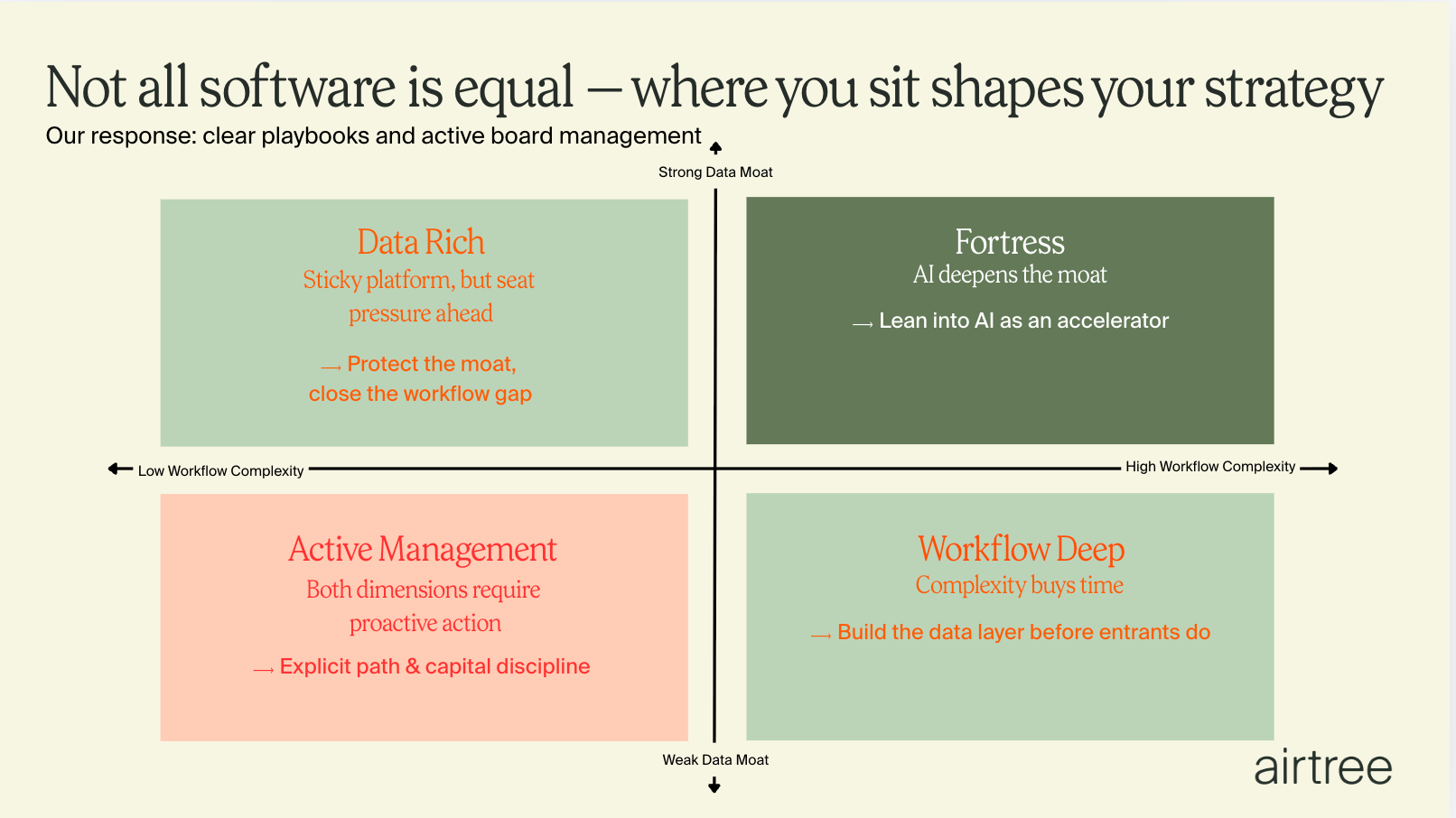
While it’s hard to compete with the SpaceX figure, Bending Spoons' NASDAQ debut at US$18.4 billion, up from an US$11 billion private valuation in October 2025, matters for different reasons. Its roll-up strategy shows that companies with moderate or inconsistent growth can still be valuable if they're capital efficient and use AI for operational leverage. We have a related thesis behind our investment in Kismet and others. As we flagged last quarter, that's the playbook we're working through with portfolio companies in the Active Management quadrant.


AirTree Ventures Custody Pty Ltd holds AFSL No. 544106.

